No index tax, by design.
Most log tools build an inverted index on ingest and bill you for the privilege. NIXL stores compact columnar data in S3 with lightweight skip-indexes, then scans it with a vectorized engine only when you query. The cost model follows the architecture: you pay for data scanned.
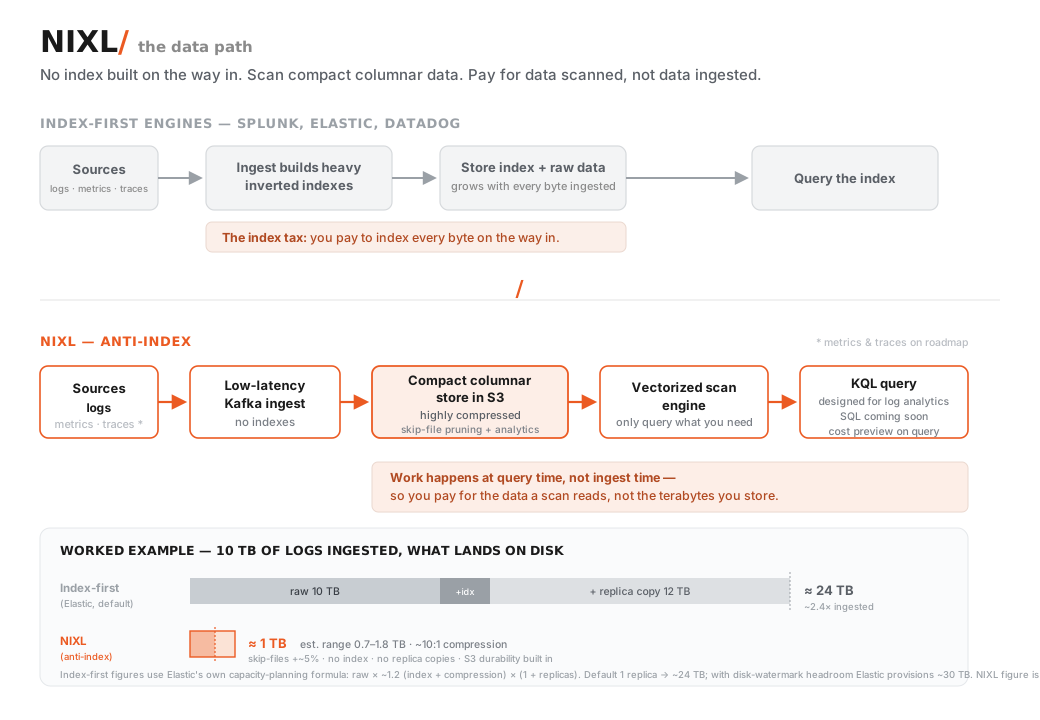
Ingest writes columnar data; queries scan only what they need.
Three moving parts.
Compact columnar storage
Logs land as columnar data (Parquet) on S3. Columnar layout means a query reads only the columns it touches, not whole rows.
Lightweight skip-indexes
Sidecar skip-indexes — zone maps, bloom and related filters — let the engine skip blocks that can't match, instead of maintaining a full inverted index on every byte.
Vectorized scan engine
A vectorized engine (DataFusion) scans the surviving blocks in parallel. Work happens at query time, on the data a query actually needs.
The index tax, removed.
Building and keeping an inverted index warm is the dominant cost in index-first tools, and it scales with what you ingest. Remove it, and two things follow: keeping data queryable gets cheap, and pricing can track real query work rather than retention.
Scanned, not ingested
You're billed on the data a scan reads. Storing more logs doesn't multiply your bill — only querying more data does, and skip-indexes keep scans reading less than the raw volume suggests.
Honest status.
Live now
- / Ingest data plane deployed on AWS (eu-west-1).
- / Query engine built at the engine level.
Coming
- / Queryable public service (not yet GA).
- / Public, reproducible benchmark — including vs Elastic.
- / SQL alongside KQL; AI: natural-language → KQL and a cost preview before a scan.
Want the benchmark when it lands?
Leave your email and we'll send the public benchmark and early-access details the day they're ready.